Today is an in between day. Drizzling, but half-heartedly. Not actually cold, but you’ll need a coat. It isn’t the kind of weather that requires the kind of dark, thick, muscular brew that gets an army marching, but nor is it a pale Earl Grey day. Brew Tea’s 1940s-style packaging suggests marching tea, but then hints at more complexity, with florid descriptions of flavour and even suggestions for food pairings. Intriguing.
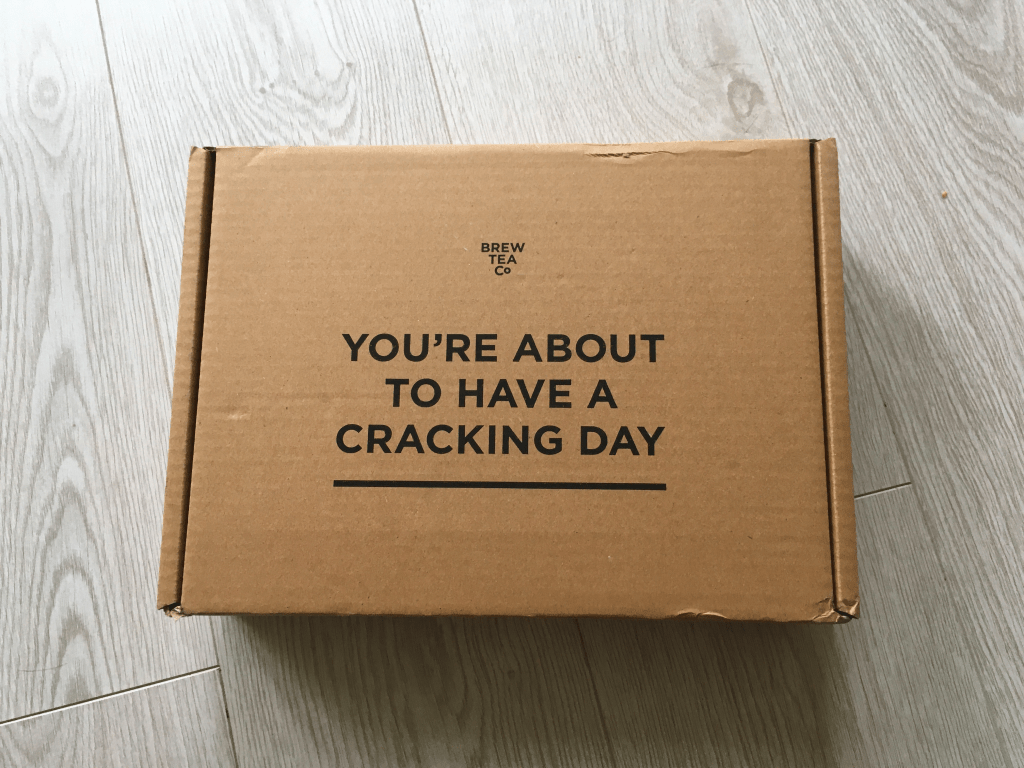
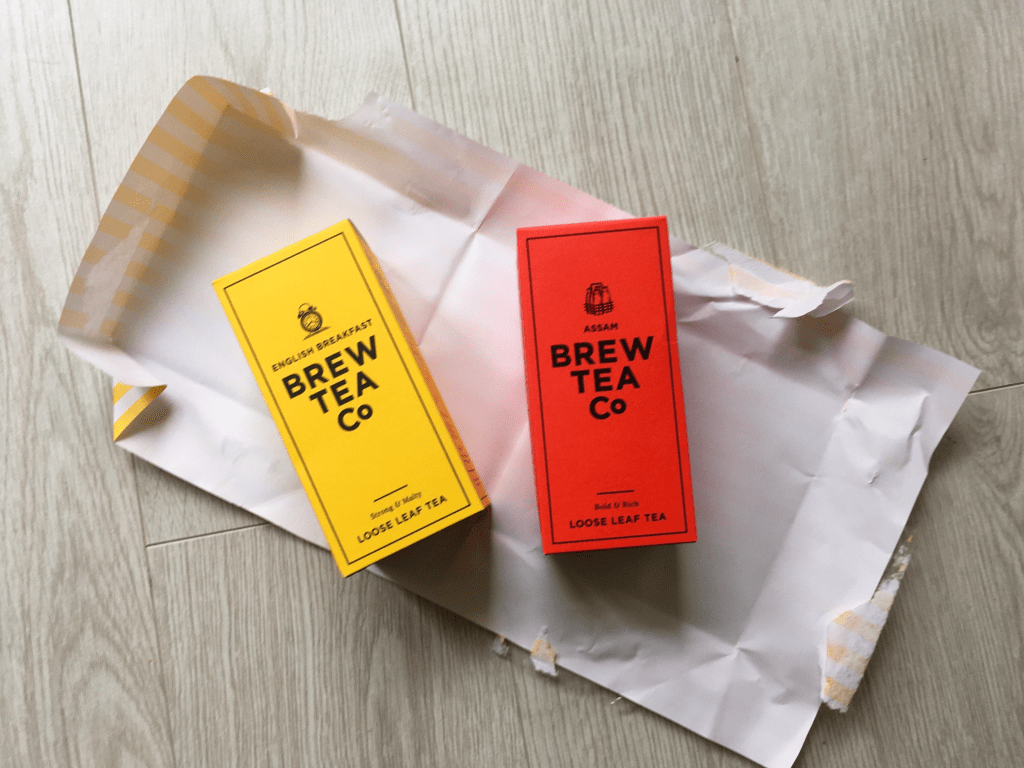
The tea arrives stylishly in a slogan-decorated box which, when dismantled, yields a lovely stripy present: gift wrapped Assam and English Breakfast. It’s a lovely idea for an actual gift, but perhaps more packaging than I’d like for our standard consumption, which could probably keep said army hydrated, if not necessarily marching.
There were two cards inside the box: a recycling guide and a ‘What to do while you brew’ card, with a game on it. The recycling guide is handy: it says that though the bag is compostable, it can ‘take a while to compost at home’. I’ve used compostable plastic-look packaging before – and found that it wasn’t. The Wife ended up having to fish it out of the compost bin while trying not to get a handful of worms or slimy peelings. I had an incident with a slug.
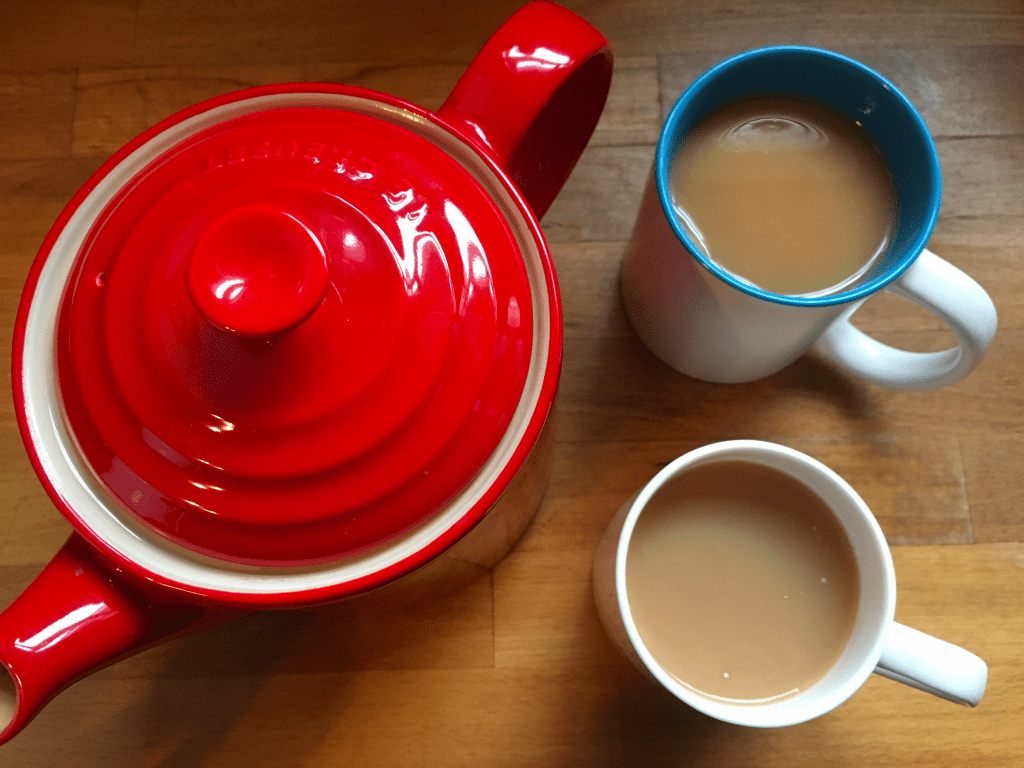
I brew the English Breakfast in my favourite teapot. The leaves obligingly expand on application of the water and the smell is just what we’re looking for – somewhere between warm oven and autumn walk. I pour it out – mine with oat milk, and The Wife’s with standard full-fat dairy. It looks a bit pale to me, maybe even a bit watery. Did I put enough leaves in the pot? Never mind; we can always brew a stronger one later. Here goes.
‘Quite a sturdy colour,’ The Wife says, on receiving her cup (a bone china number with a Quentin Blake illustration). There’s a pause while she spills some and dabs at her jeans. ‘Quite a welcoming tea smell,’ she continues. ‘Slightly overmilked’ (she can do her second cup herself, then). I’m quite impressed with mine. It doesn’t look as strong as our usual stuff, but it’s actually nicely malty, quite flavourful and has a pleasant astringency.
The Wife sips again. ‘Very subtle taste.’ Another sip, more dabbing, a quick trip into the kitchen for a cloth. ‘It’s the kind of tea you can drink gallons of without feeling over tea’d.’ She heads off to assemble her second cup, avoiding ‘overmilking’. ‘It’s one of those teas you feel like if you have a quick cuppa, you’ve had some light refreshment – rather than a strong brew where you feel like you need a biscuit with it.’
My father is quite specific on the subject of tea and biscuits, opining that a ‘naked drink’ is a horror on a par with ‘insubstantial marmalade’ (the stuff with thin peel, he explains, that you get in environmental time bomb containers, in hotels). He reliably produces Tunnock’s Teacakes, Abernethy biscuits or similar on all tea occasions.
On that note, I draw The Wife’s attention to the box, which suggests pairing this drink with food. It tells us that ‘A really good milk chocolate brings out the sweeter caramel notes.’ I rifle through the cupboards. The only milk chocolate I can find is St Petersburg souvenir chocolate, a fetching purple box of pieces individually wrapped in jolly illustrations of the city. We have to abandon this quite quickly, since the chocolate had, in The Wife’s words, ‘had its chips’ and we had perhaps carelessly allowed it to melt and reform on our journey home from the friend who supplied it. ‘Was there really no other chocolate in the cupboard?’ she says, with a furrowed brow. She finishes her cup and heads to the shops.
 Some other thoughts