Night Riviera

I feel as if I’m on a ferry, not a train. The head end of my bed seems to roll backwards every so often as the train lurches round bends.

When the knock at the door comes, The Wife is already up and ready to retrieve the morning dose of the Sacred Liquid. Getting hold of it means navigating the suitcase that wouldn’t fit under the bottom bunk and which now takes up the entire tiny floorspace, then retrieving the tray from the steward while stopping the door from slamming the tray back into the corridor.

It doesn’t look promising. There are two paper cups of hot water, two plastic-wrapped pastries and two packets of biscuits, plus tea paraphernalia including bags in sachets, sugar, milk and those long wooden stirrers that pierce the bag and result in gritty tea, if you’re not extremely careful. I had banked on being given generic non-dairy milk in one of the plastic pots with the foil lids that contain very little liquid, but which can project their contents a surprising distance. Instead, there are sachets of actual milk.

While I hum and ha about whether to have black tea or add the milk, The Wife brews hers up. The bag is in a foil sachet with a Union Jack. ‘Tregothnan’, it says. ‘THE TEA GROWN IN ENGLAND.’ I’m hesitant, but The Wife has already got stuck into hers, and reports that it’s great.

‘I like the packaging,’ she says. ‘Bold and memorable. Very excellent colour very quickly, the water temperature was spot on, though I could have done with a bit more water in there because I could have done with a bigger tea in a bigger cup. I feel like a bigger cup would have done more justice to the tea bag because I felt like I could only dip the tea bag before taking it out. It was a quality teabag that had strength. I was happy with one milk sachet. Usually I only use a quarter of a sachet because the tea’s so weak. I liked that it came on a tray, it was a little moment of Agatha Christie.’ It went down far too quickly, she laments, and she could have done with another three or four cups.

I score a sip of hers to decide on the milk question. She’s right – it’s excellent, and she makes me an identical one. The paper cup is much better than a plastic one; I have no idea why. The Wife perches on the bottom bunk, bent awkwardly and without sufficient headroom to sit up and enjoy the ambrosial brew, while I sit back on the top bunk with my cup, watching the scenery, braving cold blasts of air conditioning and trying not to spill any when the train pitches and rolls. Like The Wife’s tea, mine is over too soon and we return the tray to the steward with grateful compliments, because this lovely welcoming drink was far more than we expected.

We and our awkward luggage stumble down the corridor, on to the platform and into the lounge, where there is more of the same and the quantity deficit is repaired. We are ready to do the day.
Having a Brew

Today is an in between day. Drizzling, but half-heartedly. Not actually cold, but you’ll need a coat. It isn’t the kind of weather that requires the kind of dark, thick, muscular brew that gets an army marching, but nor is it a pale Earl Grey day. Brew Tea’s 1940s-style packaging suggests marching tea, but then hints at more complexity, with florid descriptions of flavour and even suggestions for food pairings. Intriguing.

Brew Tea package

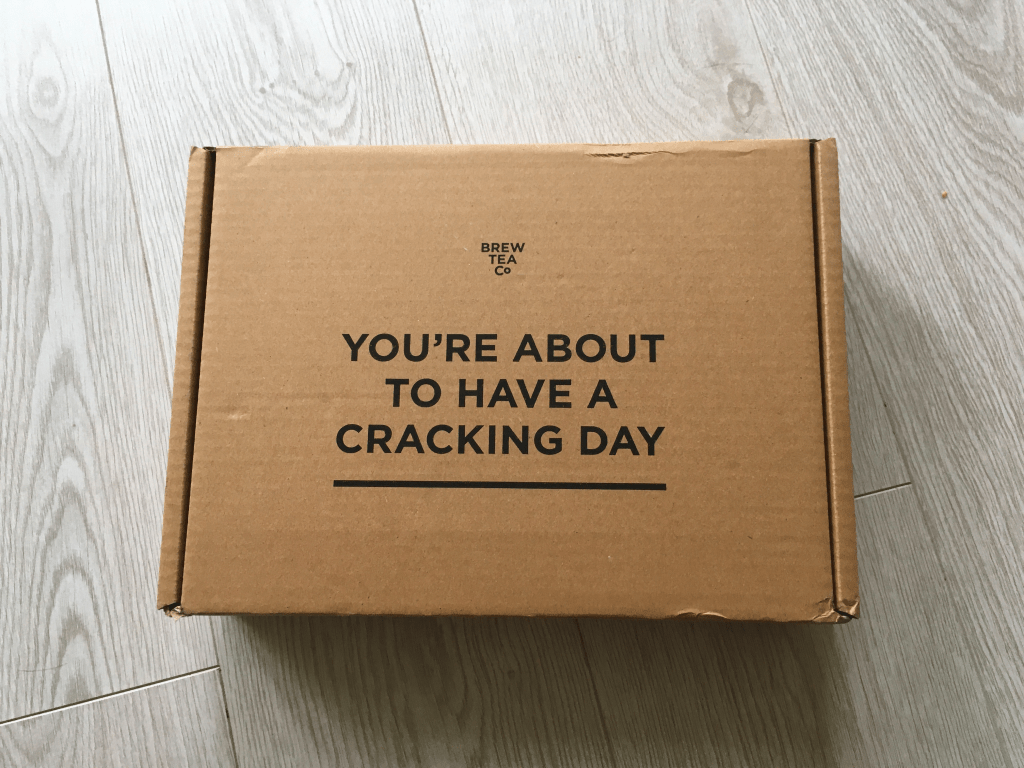
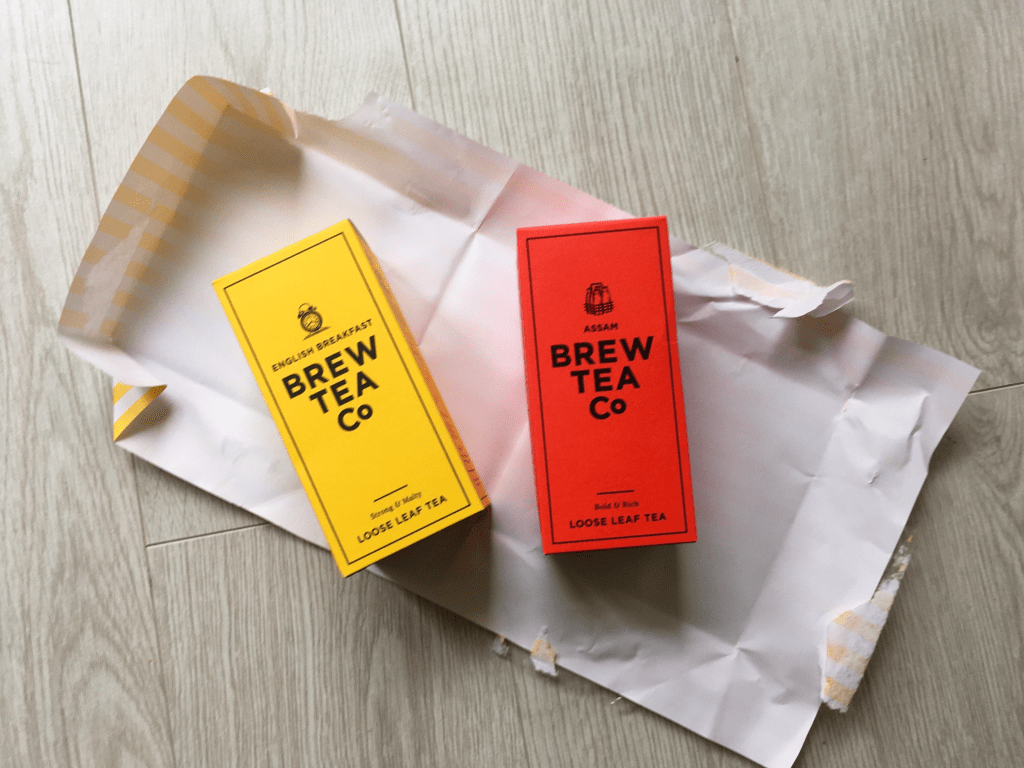
The tea arrives stylishly in a slogan-decorated box which, when dismantled, yields a lovely stripy present: gift wrapped Assam and English Breakfast. It’s a lovely idea for an actual gift, but perhaps more packaging than I’d like for our standard consumption, which could probably keep said army hydrated, if not necessarily marching.

There were two cards inside the box: a recycling guide and a ‘What to do while you brew’ card, with a game on it. The recycling guide is handy: it says that though the bag is compostable, it can ‘take a while to compost at home’. I’ve used compostable plastic-look packaging before – and found that it wasn’t. The Wife ended up having to fish it out of the compost bin while trying not to get a handful of worms or slimy peelings. I had an incident with a slug.

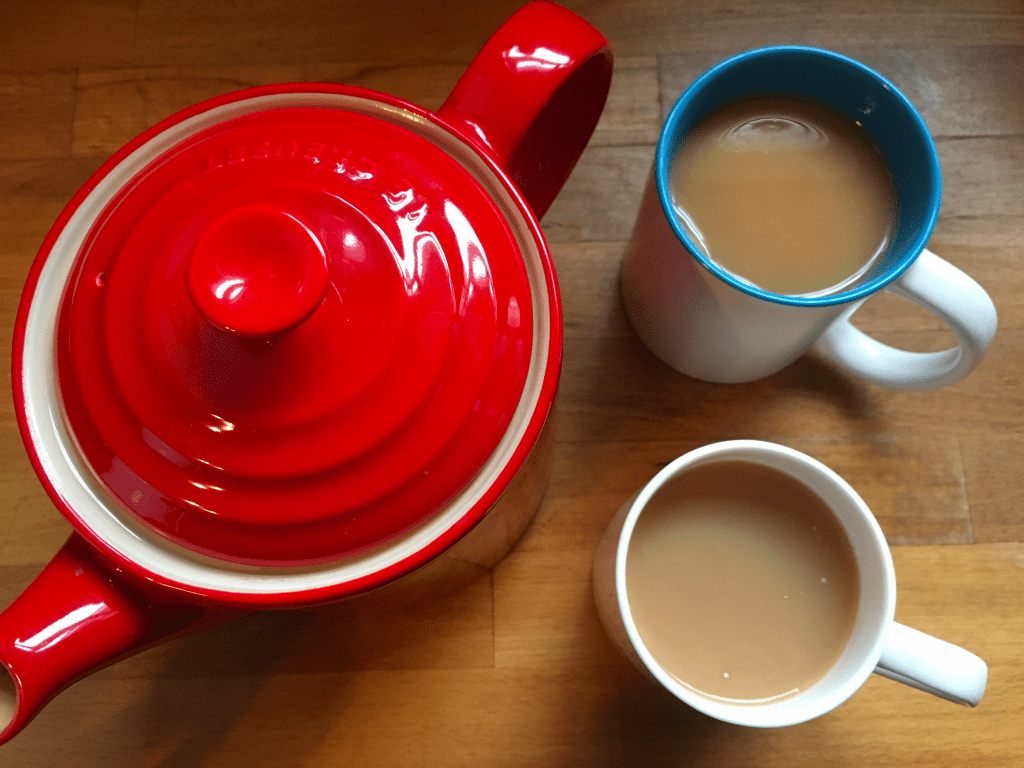
I brew the English Breakfast in my favourite teapot. The leaves obligingly expand on application of the water and the smell is just what we’re looking for – somewhere between warm oven and autumn walk. I pour it out – mine with oat milk, and The Wife’s with standard full-fat dairy. It looks a bit pale to me, maybe even a bit watery. Did I put enough leaves in the pot? Never mind; we can always brew a stronger one later. Here goes.

‘Quite a sturdy colour,’ The Wife says, on receiving her cup (a bone china number with a Quentin Blake illustration). There’s a pause while she spills some and dabs at her jeans. ‘Quite a welcoming tea smell,’ she continues. ‘Slightly overmilked’ (she can do her second cup herself, then). I’m quite impressed with mine. It doesn’t look as strong as our usual stuff, but it’s actually nicely malty, quite flavourful and has a pleasant astringency.

The Wife sips again. ‘Very subtle taste.’ Another sip, more dabbing, a quick trip into the kitchen for a cloth. ‘It’s the kind of tea you can drink gallons of without feeling over tea’d.’ She heads off to assemble her second cup, avoiding ‘overmilking’. ‘It’s one of those teas you feel like if you have a quick cuppa, you’ve had some light refreshment – rather than a strong brew where you feel like you need a biscuit with it.’

My father is quite specific on the subject of tea and biscuits, opining that a ‘naked drink’ is a horror on a par with ‘insubstantial marmalade’ (the stuff with thin peel, he explains, that you get in environmental time bomb containers, in hotels). He reliably produces Tunnock’s Teacakes, Abernethy biscuits or similar on all tea occasions.

On that note, I draw The Wife’s attention to the box, which suggests pairing this drink with food. It tells us that ‘A really good milk chocolate brings out the sweeter caramel notes.’ I rifle through the cupboards. The only milk chocolate I can find is St Petersburg souvenir chocolate, a fetching purple box of pieces individually wrapped in jolly illustrations of the city. We have to abandon this quite quickly, since the chocolate had, in The Wife’s words, ‘had its chips’ and we had perhaps carelessly allowed it to melt and reform on our journey home from the friend who supplied it. ‘Was there really no other chocolate in the cupboard?’ she says, with a furrowed brow. She finishes her cup and heads to the shops.